

Setting Goals is a SMART way to Change Behavior
- lizziedunavin
- Aug 17, 2020
- 4 min read
How many times have you said, "Come Monday I am working out every day. I'm ditching the junk food, only salads from here on out." I know I've said it. Mondays just seem like great days to start a behavior change program (diets, workouts, etc.). I don't know why, it seems like it may be the hardest day to switch things up. Usually you are coming off of a weekend filled with not so great food and activities, a Monday shock to the system just seems cruel.
Anyways, off track; that is not what we are here to talk about. We are here to talk about setting goals, but not just any goals, SMART goals. When creating a behavior change program there are a few things needed right away: 1. an operationally defined behavior (something observable and measurable) and 2. a SMART goal. I think the easiest way to write this post for everyone to understand, is with an example.
Behavior: Meal preparation, defined as writing down breakfast, lunch, snack, and dinner for the day. As well as packing any meals eaten outside of the home into smaller containers for transport.

Looking at this behavior definition objectively, if I walked into someones home and needed to mark if they had "meal prepped" for the week, I would first ask for the written schedule of meals. I would then ask what meals will be eaten outside of the home. I would check to see if all the meals eaten outside of the home were packaged into smaller containers for convenience and easy transport. This behavior can be observed and measured by a 3rd party. Now let's look at SMART goals.
SMART goals stand for specific, measurable, achievable, relevant, and time bound. Although there may be more that goes into creating quality goals, these five objectives do a pretty great job of covering it. Plus everyone wants smart goals!
Specific: Make sure the behavior is observable and measurable. Identify where the behavior will be performed (at home, school, gym, track, trail, or anywhere!). How you are going to perform the behavior. Most of all, write your goal so anyone could come in and read it and determine if you have met the goal.
Measurable: Determine how you are going to measure progress toward your goal (e.g. weight, steps, days meal prepped, weight lifted, etc.). Then choose a mastery criteria for your goal. How many days do you need to perform a skill to consider it mastered? How much weight do you need to lose to consider your goal met?
Achievable: Take some baseline data before you start your goal. If your goal is about losing weight, how much weight have you been losing? Or gaining? Take some data on your weight over the course of a week of so. If your goal is to work out more, take some data on how often you are currently working out. If you currently work out zero days a week, your goal should probably not be to run 7 days a week for 60 minutes every day. This goal may not be achievable. You may possibly start with stretching, walking, or 30 minutes of exercise 3-5 days a week. We want to shape behavior into an achievable goal.
Relevant: Your goal should be socially significant. For a goal to have the ultimate effectiveness, it should impact your life in an important way. If I hate eggplant and my only goal is to eat eggplant every day, this goal isn't very significant to my life. This goal will most likely not have a positive impact on the things that I find valuable (unless eggplant is super valuable to my life, then scratch that.) But if my goal is to lose 20 pounds this goal may be significant to my life as it will make it easier for me to be active and live a healthier lifestyle.
Time Bound: Although this is often forgotten when creating goals, time sensitive goals are proven to be more effective. When you set yourself up for the rabbit hold of "I'll start on Monday." You never truly have a start point and end point for your goals. It's important to monitor progress and push for success like you are running toward a finish line. I think this is another reason why HealthyWage (see an earlier post) has been so successful. You sign up and weigh in on a certain day you then have a a set time frame to meet your goal or lose your money.
Goal: Every Sunday Lizzie will write a list of meals for the week including breakfast, lunch, snack, and dinner. Lizzie will then prepare separate containers of food for the weeks meals eaten outside of the home. We will know Lizzie has mastered this skill when she has planned and prepared 5 out of 7 days of the week for 4 consecutive weeks by December 1, 2020.
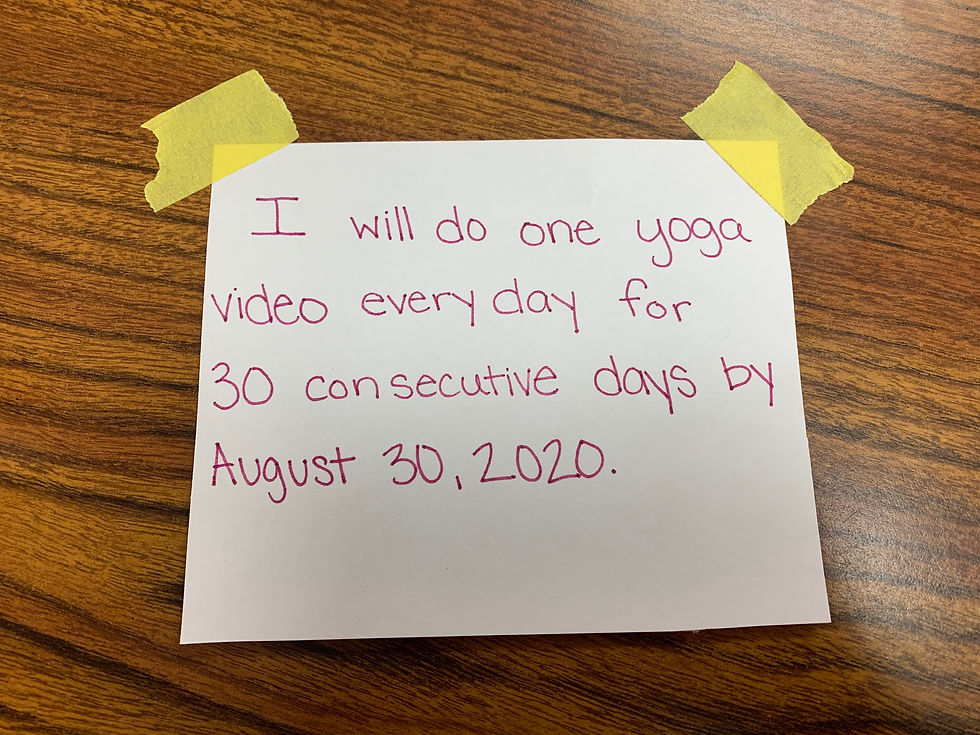
I highly recommend setting a SMART goal and seeing how you progress. It doesn't have to be a huge challenging goal, start small! An example: I will eat breakfast before getting in my car for five out of seven days of the week for two consecutive weeks by September 30, 2020.
These goals don't have to be world changing! As I have stated in my sustainability posts, small changes have great impacts. Post your goal in the comments, we are all here to support each other in this journey to a healthier lifestyle.


Comments